

Home, Kitchen & Lifestyle • Season 3 • Episode 17
Urban Space
Starts From - ₹350
Where to Buy
Product Details
Entrepreneur Background
Rohit Agarwal and Radhika Koolwal are the co-founders of Urban Space, a complete home textile brand. Rohit Agarwal and Radhika Koolwal are Season 3's most commercially self-sufficient husband-wife home furnishing founders. Together they built Urban Space from a home textile business into India's most comprehensively catalogued online home furnishing brand with 1,200 plus SKUs across bedsheets, curtains, table linen, rugs, and cushion covers, achieving ₹20.5 crore FY22-23 revenue with 27% net profit, entirely bootstrapped. The founders started their pitch by sharing how important our houses are for us and we want to style them in the best possible ways. But, it takes both time and money to decorate a house and not everyone can afford that. To help people find quality textile products at affordable prices, they started Urban Space.
The Product / Service
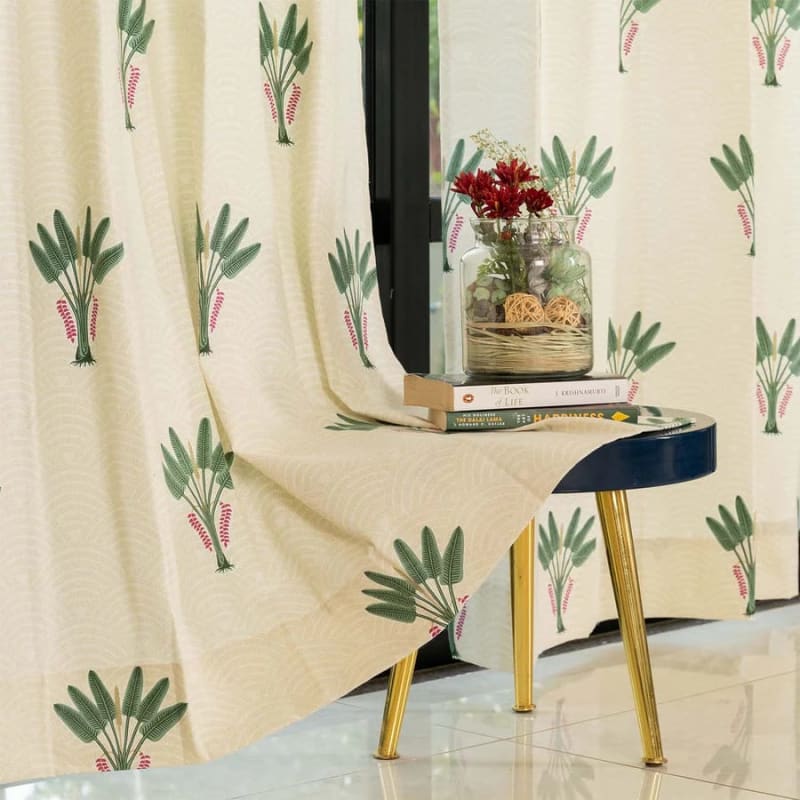
Urban Space was proudly featured on Shark Tank India, where we shared our belief on national television that every home deserves thoughtful design, dependable quality, and honest pricing. D4commerce Urban Space is India's most comprehensively catalogued online home furnishing brand, offering 1,200 plus SKUs across bedsheets, curtains, cushion covers, table linen, rugs, dhurries, and mattress protectors. All products are designed with Indian cultural aesthetics ("Rooted in India, inspired by cultures and vibes"), produced in 100% cotton with anti-skid and anti-fade properties, and priced for year-round accessibility rather than seasonal sale dependence. The brand's positioning as the "only brand that deals with so many product categories" in home furnishing gives Urban Space a specific one-stop-shop competitive advantage over single-category competitors (brands that sell only bedsheets, or only curtains). A customer who furnishes their entire home from one brand creates a significantly
The Ask
Amount Asked: ₹1.8 crore Equity Offered: 1% Implied Pre-Money Valuation: ₹180 crore
Pitch Presentation
In the climactic conclusion of Shark Tank Season 3 Episode 17, Urban Space, a home furnishings brand led by a husband-wife duo, delivered a standout pitch that captured the attention of both the sharks and the audience. With a proven track record of profitability and a knack for creating stylish yet functional pieces, Urban Space showcased its ability to turn houses into homes. Rohit and Radhika walked into Season 3 Episode 17 as the episode's most financially impressive founders. The ₹5 crore monthly revenue with 27% net margins and ₹20.5 crore FY22-23 revenue immediately captured every Shark's commercial attention. However, the ₹180 crore valuation ask (approximately 9x revenue) shocked the Sharks. All the Sharks were in shock because they asked for a valuation of 180 crores for their business.
Sharks' Reactions & Criticism
Vineeta Singh exited early. She did not see sufficient brand differentiation in the home furnishing category to justify the ₹180 crore valuation, noting that the category was highly competitive with many D2C home textile brands emerging. Namita Thapar exited on domain expertise grounds. Pharmaceutical distribution provides no specific commercial leverage for a home textile D2C brand. Aman Gupta exited citing the valuation gap. He appreciated the revenue and profitability metrics but found the ₹180 crore ask too aggressive for a home textile brand at this stage. Amit Jain made the first offer: ₹1.8 crore for 2% equity plus 5% royalty until ₹2.7 crore recouped. He also proposed merging the B2B business into the brand entity as a condition. Anupam Mittal made a competing offer: ₹1.8 crore for 2% equity plus 3% royalty (later reduced to 2%) until ₹3.6 crore recouped. He also proposed the same B2B merger condition.
Negotiation & Offers
Amit Jain extended the first offer of ₹1.8 crore with 2% equity and 5% royalty until ₹2.7 crore is recouped. Meanwhile, Anupam Mittal proposed ₹1.8 crore in exchange for 2% equity along with 3% royalty until ₹3.6 crore is recouped. However, he later reduced the royalty to 2%. Unfortunately, the founders were not happy with the royalty deal and counteroffered a maximum equity of 1.25%. But both the sharks did not agree. So, Urban Space could not land a deal with any Sharks. The founders countered both offers at 1.25% maximum equity with no royalty, arguing that a business generating 27% net profit should not pay royalty on top of equity dilution. Both Sharks refused the counter. The negotiation collapsed on three irreconcilable differences: valuation (₹180 crore vs. ₹90 crore), royalty (founders refused any royalty), and B2B merger (founders resisted merging the B2B operations).
Final Verdict
Rohit Agarwal and Radhika Koolwal left Shark Tank India Season 3 Episode 17 without any investment. Two competing offers from Amit Jain and Anupam Mittal were both declined by the founders who refused royalty conditions and the B2B merger requirement. The valuation gap (₹180 crore ask vs. approximately ₹90 crore Shark valuation) and the founders' unwillingness to accept royalty on a 27% net margin business made the deal commercially unbridgeable from both sides.
Beyond Shark Tank
Despite not bagging a deal from the sharks, the company's net valuation saw an increase since its appearance on the show. It has managed to successfully raise funds from investors and plans to reach a larger audience by expanding its operations. D2c Urban Space continues thriving without Shark Tank capital. The company successfully raised funds from investors outside the show, validating the founders' belief that their ₹180 crore valuation ask was not unreasonable for the market, even if it was too aggressive for the Shark Tank format. The dedicated "Shark Tank Products" collection on urbanspacestore.in (featuring the exact products displayed during the pitch on Season 3 Episode 17) converts the national broadcast into ongoing consumer traffic, and customer testimonials on the site confirm the product quality that every Shark had acknowledged during the pitch. The FY23-24 projected revenue of ₹45 crore (up from ₹20.5 crore FY22-23) represents over 100% year-on-year growth, demonstrating that the Shark Tank visibility boost accelerated a growth trajectory that was already commercially sound. The 27% net profit margin at this revenue level makes Urban Space one of Season 3's most profitably self-sustaining no-deal companies.