Toys, Kids & Education • Season 4 • Episode 21
The Good Doll
Starts From - ₹1,519
Where to Buy
Product Details
Entrepreneur Background
Suhas Ramegowda and Sunita Suhas are Season 4's most lifestyle-transforming husband-wife founders. In 2018, they made the radical decision to leave their corporate careers and relocate from urban India to the Nilgiris (the "Blue Mountains" of southern Tamil Nadu), seeking a more meaningful existence connected to nature, community, and purpose. In the Nilgiris, they discovered a community of extraordinarily skilled women artisans whose traditional craft skills (sewing, embroidery, fabric work) were underutilised and undervalued. Simultaneously, they observed that 90% of toys sold in India are made from plastic that eventually pollutes landfills and oceans. The Good Doll was born at the intersection of these two observations: create beautiful, sustainable toys using upcycled fabric, crafted by rural women earning fair wages.
The Product / Service
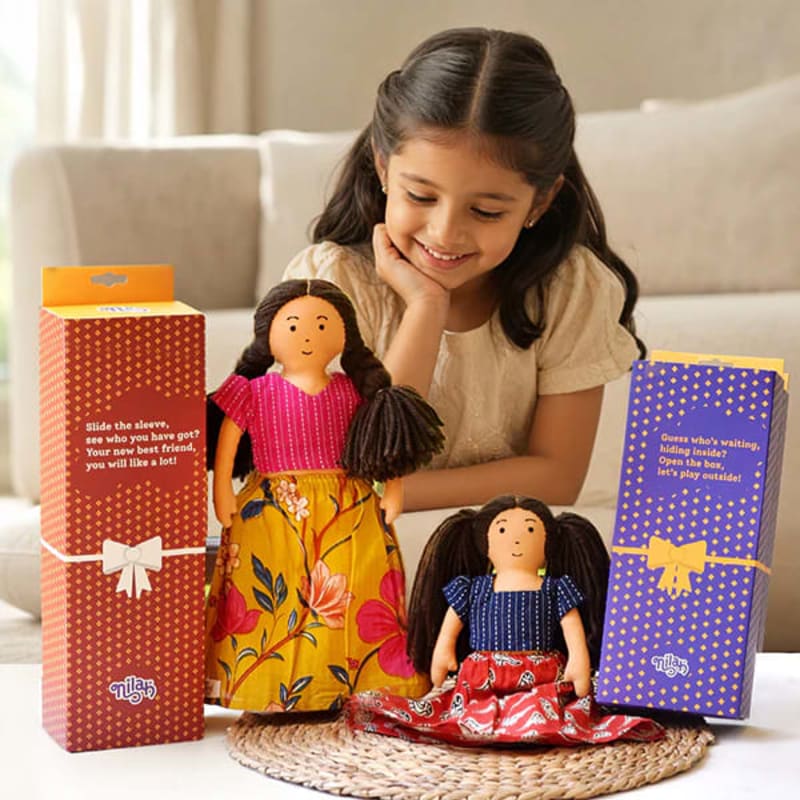
The Good Doll produces handcrafted rag dolls from upcycled fabric that serve as sustainable, culturally representative, body-positive alternatives to plastic toys like Barbie. Each doll is: made entirely from recycled textiles (reducing plastic waste), handcrafted by women artisans from rural and indigenous communities (creating dignified employment), designed with diverse Indian skin tones and features (so children see themselves reflected), equipped with interchangeable clothing (extending play value and teaching dressing skills), and tested for child safety (meeting safety standards without chemical treatments). The Nilah Universe expansion plan is The Good Doll's most commercially ambitious IP development: beyond physical dolls, the founders plan to create illustrated storybooks featuring Nilah's adventures, comic strips exploring Indian cultural themes through Nilah's family, and eventually an animation series bringing Nilah to screens. This universe-building approach mirrors the
The Ask
Amount Asked: ₹50 lakhs Equity Offered: 5% Implied Pre-Money Valuation: ₹10 crore
Pitch Presentation
Suhas and Sunita walked into Season 4 Episode 21 with the most emotionally purposeful product display of the episode. The Nilah dolls, with their diverse Indian skin tones, traditional clothing, and handcrafted upcycled-fabric construction, immediately communicated a mission that transcended commerce: giving Indian children toys that look like them, made by women whose livelihoods depend on the craft, from materials that do not pollute the planet. The founders shared their personal transformation: leaving corporate careers, moving to the Nilgiris, discovering the artisan community, and building The Good Doll as a vehicle for both environmental sustainability and women's economic empowerment. The disclosure that Nithin Kamath (Zerodha founder, one of India's wealthiest entrepreneurs) had invested ₹40 lakhs through Rainmatter Capital provided institutional credibility.
Sharks' Reactions & Criticism
Namita Thapar delivered the most directly commercial rejection: "not investable." She questioned why a company already backed by Nithin Kamath (Zerodha) was seeking ₹50 lakhs on Shark Tank, implying that the founders should raise from their existing investor rather than diluting to new Sharks. Vineeta Singh gave the most nuanced exit: she acknowledged the sustainability, inclusivity, and women's empowerment mission but noted the inherent challenge of balancing these social objectives with a scalable, profitable business model. Aman Gupta acknowledged the growing market demand for sustainable products but raised concerns about competition from both traditional toy companies launching "eco" lines and other sustainable toy startups entering the market. Kunal Bahl appreciated the founders' corporate-to-Nilgiris transformation story and the cultural representation mission but did not invest, sharing concerns about the revenue scale (₹70 lakhs) relative to the ₹10 crore valuation. Ritesh Agarwal (or fifth Shark present) did not invest, sharing similar scale and competition concerns.
Negotiation & Offers
No Shark made a formal offer. All five exited before entering negotiation. The unanimous concern was the tension between social mission breadth (sustainability plus inclusivity plus women's empowerment plus cultural representation) and commercial focus: each social objective, while individually admirable, added operational complexity and diluted the commercial thesis. The ₹10 crore valuation on ₹70 lakhs revenue (14x revenue multiple) was further complicated by the existing Rainmatter Capital backing, which raised the question of why new investor capital was needed at this stage.
Final Verdict
Suhas Ramegowda and Sunita Suhas left Shark Tank India Season 4 Episode 21 without any investment. All five Sharks declined, each acknowledging the mission's importance while questioning the commercial scalability of a handcrafted, socially-driven, ₹70 lakh revenue toy brand at ₹10 crore valuation. However, as LocalSamosa observed: "not every business needs a shark to make an impact." The Good Doll's impact is measured not in Shark Tank deals but in 32,000 children holding dolls that look like them, made by women who earn fair wages, from fabrics that would otherwise end up in landfills.
Beyond Shark Tank
The Good Doll continues building from the Nilgiris with enhanced national visibility from the Shark Tank appearance. The company projects ₹1.2 to 1.5 crore revenue for FY24-25 (up from ₹70 lakhs in FY23-24, representing 70 to 115% growth), funded by existing capital from Rainmatter Capital and government grants. The Nilah Universe expansion represents the brand's most commercially transformative strategic initiative: storybooks, comic strips, and an animation series around Nilah and her Nilgiri family could convert The Good Doll from a physical product company into an Indian children's IP company. If Nilah becomes a beloved Indian children's character (the way Chhota Bheem became India's most recognisable animated character), the IP licensing revenue (books, shows, merchandise, theme experiences) could dwarf physical doll sales.