
Sharks Invested


Product Details
Entrepreneur Background
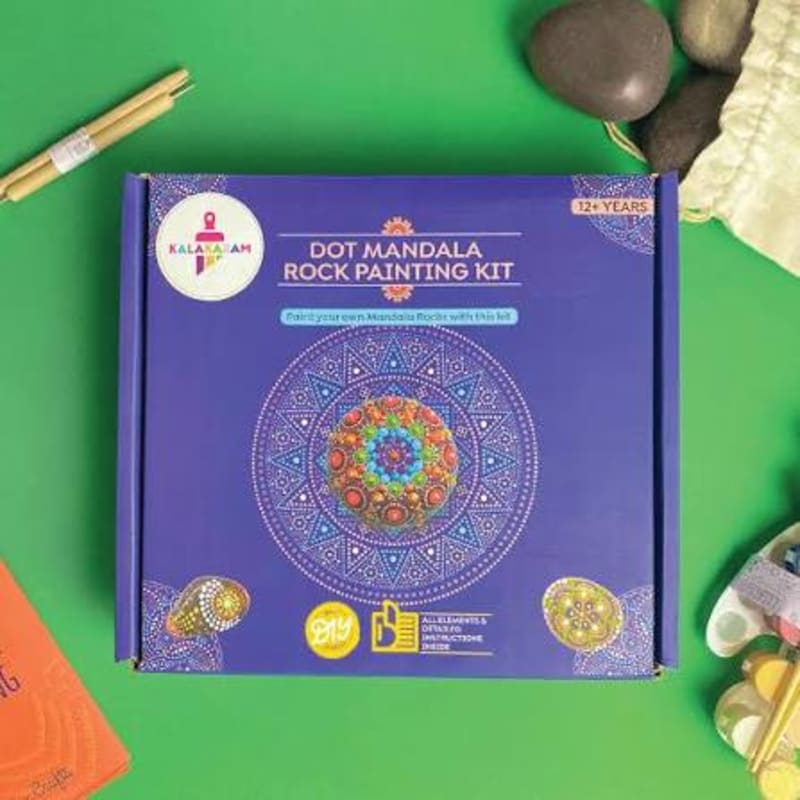
Chaitanya Malhotra started by engaging judges in a therapeutic Mandala painting session during the second week of the aired show. What also aided him in starting the brand was the fact that he belongs to a family with a 50-year legacy and expertise in selling raw materials for arts and crafts. Sharktankindiaclub Chaitanya Malhotra is Season 3's most generationally art-industry-rooted DIY brand founder a third-generation art and craft entrepreneur whose grandfather ran a wholesale art supplies shop in Delhi's Sadar Bazar for 50 years, whose father Kamal co-founded the brand alongside him, and who himself had worked as a partner at Asian Hobby Crafts before recognising that India's children needed curated, complete, ready-to-create DIY kits rather than raw art materials that required parents to assemble activities themselves.
The Product / Service
Kalakaram focuses on "Art as therapy". The aim of the brand is to foster imagination and creativity among kids and youth, which is getting killed due to electronic devices. Too much exposure to electronic devices such as play stations and mobile phones are increasing the anxiety level of kids and their thinking capacity. Kalakaram is India's most comprehensively curated children's DIY art and craft brand — producing 75 plus ready-to-create activity kits that provide all necessary materials, tools, and instructions for children aged 4 to 14 to complete creative art projects independently, fostering creativity, self-expression, confidence, and problem-solving abilities while providing a screen-free alternative to electronic devices.
The Ask
Amount Asked: ₹50 lakhs Equity Offered: 2.5% Implied Pre-Money Valuation: ₹20 crore
Pitch Presentation
Chaitanya opened Season 3 Episode 6 with the most participatory pitch entry of the episode handing each Shark a Mandala Art Coasters Kit and guiding them through a therapeutic painting session before any business discussion began. Namita's surprisingly excellent Mandala painting skills became the pitch's most unexpectedly charming moment. The pitch transitioned from the therapeutic painting session to the business case: India's children were losing creativity and imagination to electronic device overexposure, and Kalakaram's curated DIY kits provided the screen-free creative engagement that parents were desperately seeking. The 50-year family legacy in art supplies gave the brand's product curation immediate credibility. The commercial pitch highlighted 350 plus retail stores in 1.5 years, a 90/10 offline-to-online sales split, and projected monthly revenues of ₹50 lakhs demonstrating rapid offline distribution traction that most D2C brands take years to build.
Sharks' Reactions & Criticism
Aman Gupta offered ₹50 lakhs for 5% equity solo but refused to collaborate with other Sharks. Peyush Bansal found the products innovative but noted they were one-time-use kits. He offered ₹50 lakhs for 5% equity and was willing to collaborate, eventually joining the final three-Shark coalition at ₹60 lakhs for 6%. Namita Thapar was amazed by the product variety and impressed by her own Mandala painting experience. Anupam Mittal raised pricing concerns but offered ₹50 lakhs for 4% equity. He joined Namita and Peyush in the final three-Shark coalition at 6% total equity. Vineeta Singh found the products affordable and well-made but did not make an offer, citing concerns about scalability clarity and valuation at the current commercial stage.
Negotiation & Offers
In the negotiation process, Peyush revised his offer to ₹60 lakhs for a 6% equity share. However, Anupam and Namita decided to collaborate. Aman, initially preferring to go solo, adjusted his offer to ₹60 lakhs for a 6% equity share. Despite the revision, Aman ultimately chose to step out of the negotiations as Chaitanya insisted that he collaborate with other sharks. The negotiation progressed through multiple offers: Aman's solo ₹50L for 5%, Namita's ₹50L for 5%, Peyush's ₹50L for 5%, Anupam's ₹50L for 4%. Chaitanya's insistence on a multi-Shark deal forced the Sharks to form coalitions. Aman refused to collaborate and exited. Peyush revised to ₹60L for 6%, and Namita and Anupam joined. The founder accepted the three-Shark coalition — ₹60 lakhs for 6% equity (₹20 lakhs each for 2% each) at ₹10 crore valuation.
Final Verdict
Chaitanya Malhotra accepted Namita Thapar, Anupam Mittal, and Peyush Bansal's joint offer of ₹60 lakhs for 6% equity at ₹10 crore valuation. The founder's insistence on a multi-Shark deal declining Aman's solo offer communicated a specific strategic preference: three different strategic networks (Namita's institutional reach, Anupam's digital platform expertise, Peyush's consumer product scaling) simultaneously rather than one Shark's expertise alone. The deal was confirmed and formally closed after the episode aired.
Beyond Shark Tank
Our research on KalaKaram has revealed that their Shark Tank India deal with Anupam, Peyush and Namita is indeed finalized and closed. 'There are a lot of things to be planned, and with Shark Tank, the path has become a little easier in terms of marketing and people knowing the brand.' Kalakaram continues expanding the three-Shark investment providing both capital and the specific strategic guidance for the brand's ambitious post-Shark Tank vision: expanding beyond DIY kits into art cafes, workshops, and art parties where consumers can experience creative activities in physical community spaces. This evolution from product company to experience brand mirrors the global trend of experiential retail outperforming product-only retail.